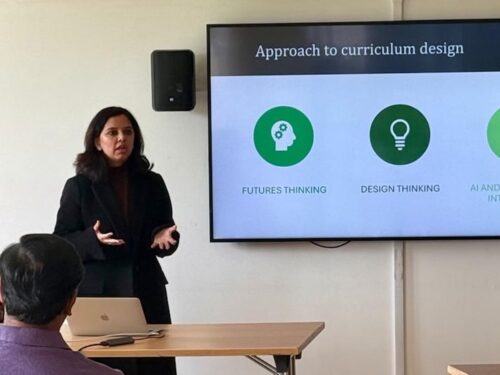
I truly enjoyed the deeply intellectual conversations during our sessions. I look forward to continued engagements.
My biggest takeaway was that the concept of multiple possible futures in education, rather than a single predetermined path, is especially powerful. As we embrace technology while preserving the core purpose of education, we are encouraged to balance innovation with equity and develop the anticipatory thinking needed for an uncertain world. It also reinforced my belief that futures thinking is an essential skill for young people, and that tools such as the Futures Triangle can help students better understand, imagine, and shape the futures ahead of them.
I am keen to explore the idea of “assessment futures.” Assessment need not be unilinear; technology can enable more intentional, personalised, and diverse ways for students to demonstrate learning. I am particularly interested in understanding how our current assessment beliefs and practices will hold, adapt, or transform through technological transitions.
What I have brought back to my work is a more deliberate temporal lens on decision-making, thinking simultaneously about the past that shaped where we are, the present we are navigating, the near future we can influence, and the longer future we are responsible for. That longitudinal view, combined with the dialogic virtues the programme surfaced, has changed not just what I think about technology and leadership, but how I think. And at this stage of my career, that is not a small thing to say.